Imagine you’re a professional in Washington State, working tirelessly to build your reputation and business. You’ve dotted every ‘i’ and crossed every ‘t’. But what if, despite your best efforts, a mistake slips through the cracks? That’s where errors and omissions insurance steps in, acting as your safety net. It’s not just any insurance; it’s the unsung hero of many industries, providing coverage when you need it the most.
Errors and omissions insurance is not just another policy – it’s a lifeline for professionals navigating the complex web of potential legal ramifications. In a state bustling with innovators and entrepreneurs, understanding the nuances of this insurance is essential. From tech startups to real estate firms, the right coverage can make the difference between a minor hiccup and a major financial setback.
Introduction to Errors and Omissions Insurance in Washington State
Did you know that a single oversight could cost your business thousands of dollars? In Washington State, Errors and Omissions (E&O) Insurance is your lifeline against costly mistakes. This coverage is crucial for protecting professionals from claims of negligence or inadequate work.
Errors and Omissions insurance ensures that if you or your business is accused of making a mistake, you won’t be left shouldering the financial burden alone. It’s especially vital in a state like Washington, where industries like technology, real estate, and healthcare thrive. Without this insurance, you could face severe legal consequences, including hefty fines and lawsuits that can cripple your business.
Industries in Washington State That Need E&O Insurance
Washington is home to some booming sectors. Tech companies in Seattle, real estate agents in Bellevue, and healthcare professionals across the state all need robust E&O policies. Why? Because in these industries, even a minor error can lead to significant financial loss or even reputational damage. Imagine a real estate agent giving incorrect information that leads to a buyer’s financial loss. That’s a lawsuit waiting to happen.
Pro Tip: If you’re in a client-facing profession, double-check your E&O coverage limits. They should align with the typical claim amounts in your industry.
Legal Implications of Not Having E&O Insurance
Here’s the deal: if you skip on E&O insurance, you’re exposing yourself to potential legal nightmares. In Washington, not having adequate coverage could mean paying out of pocket for legal fees and settlements. This isn’t just a financial risk; it can also damage your professional reputation.
Consider a scenario where a tech consultant gives faulty advice leading to a client’s data breach. Without E&O insurance, that consultant could be personally liable. It’s not just about protecting your business, it’s about protecting yourself too.
Coverage Details of Errors and Omissions Insurance
Did you know that even a tiny mistake could cost your business thousands of dollars? That’s where Errors and Omissions (E&O) Insurance comes into play.
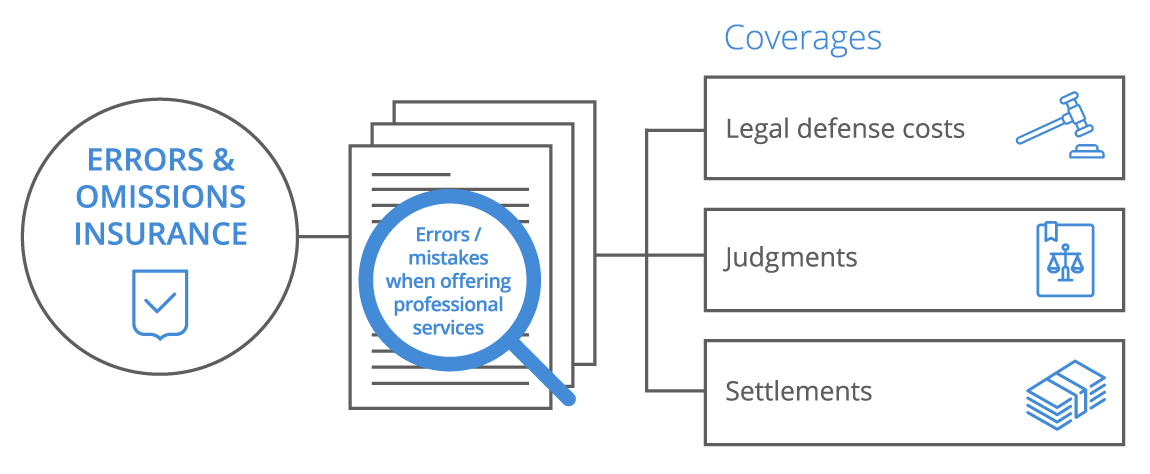
This type of insurance is your safety net, shielding you from claims of negligence or inadequate work. If a client believes you made an error that cost them money, E&O insurance can cover your legal defense and any settlements or judgments.
What Errors and Omissions Insurance Covers
Here’s the deal: E&O insurance typically covers a wide range of professional services. If your advice or service leads to financial loss for a client, you’re protected. Policies cover legal costs, settlements, and judgments, so you’re never alone in the courtroom.
But, it’s not just about mistakes. If a client claims you failed to deliver a service as promised, E&O has your back. This insurance is crucial for anyone providing professional advice or services.
Common Exclusions in Errors and Omissions Policies
Not everything is covered. Let’s break down the exclusions. Most policies won’t cover fraudulent acts, criminal actions, or bodily injuries. Also, if you promise something outside your expertise, E&O insurance might not help you if things go south.
Another exclusion? Intellectual property claims. If you accidentally copy a competitor’s content, don’t expect E&O to foot the bill. Always read the fine print to understand what’s in and out of bounds.
Errors and Omissions Insurance Vs. Other Insurance Types
How does E&O stack up against other insurances? Check out this quick comparison:
| Insurance Type | Covers | Does Not Cover |
|---|---|---|
| Errors and Omissions | Professional mistakes, negligence | Criminal acts, bodily injury |
| General Liability | Bodily injury, property damage | Professional mistakes |
| Professional Liability | Similar to E&O, broader scope | Property damage, bodily injury |
Examples of Covered Claims
Imagine this: You’re a consultant, and your advice leads to a client’s financial loss. They sue. E&O insurance to the rescue! Another scenario? Maybe you’re a graphic designer, and a client claims your design flaw cost them sales.
Pro Tip: Always document your work and communications. This can be vital in defending an E&O claim.
These are just a couple of examples. Essentially, if it’s a mistake related to your professional service, E&O insurance is your shield.
Obtaining Errors and Omissions Insurance in Washington State
Did you know that a single lawsuit could cost your business thousands of dollars? If you’re doing business in Washington State, Errors and Omissions (E&O) insurance is a must-have to cushion against costly legal claims. But how exactly do you get started?
Getting E&O insurance isn’t rocket science, but it does require some know-how. You have to understand the process, the costs involved, and how to choose the right insurer. Let’s break it down.
The Acquisition Process
First, you need to figure out how much coverage your business requires. This depends on your industry, the size of your company, and the complexity of the services you offer. Once you have this baseline, reach out to multiple insurers for quotes. This gives you a range of options and allows for competitive pricing.
Once you have quotes, it’s time to sift through the details. Look at the coverage limits, exclusions, and any add-on options that might be beneficial for your business. Don’t just look at the price; understand what you’re getting.
Factors Influencing Insurance Costs
The cost of E&O insurance can vary widely. Factors like the nature of your business, your claims history, and the level of risk your industry faces all play into it. Businesses in high-risk industries might pay more than those in lower-risk fields. However, don’t be tempted to skimp on coverage just to save a few bucks; it might cost you more in the long run.
Pro Tip: Always opt for comprehensive coverage. It might be more expensive upfront, but it can save your business from financial ruin.
Choosing the Right Provider
Choosing the right insurer is crucial. Look for companies that specialize in E&O insurance and have a solid reputation in Washington State. Check reviews, ask for recommendations, and don’t be afraid to ask potential insurers detailed questions about their policies.
Consider the financial stability of the insurer, as this can be a telling sign of their ability to pay claims. You can usually find their ratings from agencies like A.M. Best or Standard & Poor’s.
Checklist for Professionals
Here’s a handy checklist to ensure you’re on the right track:
- Assess your business’s specific coverage needs.
- Research and request quotes from multiple insurers.
- Compare coverage limits, exclusions, and any additional options.
- Check the insurer’s reputation and financial stability.
- Ensure the policy covers your industry-specific risks.
- Ask about payment plans or discounts for bundling policies.
By following these steps, you’ll be well on your way to securing the right Errors and Omissions insurance for your business in Washington State.
Legal and Regulatory Considerations
Did you know that a whopping 36% of all small businesses have been sued at least once? If you’re in Washington State, understanding the legal landscape surrounding Errors and Omissions (E&O) Insurance is crucial to protecting your business from costly lawsuits.
Washington State has a specific regulatory framework governing E&O insurance, designed to ensure that businesses have the coverage they need. This framework involves various legal requirements and compliance checks, which can be daunting if you’re not familiar with them. But don’t worry, I’ll break it down for you.
Regulatory Framework and Compliance
The Washington State Office of the Insurance Commissioner (OIC) is the primary body that regulates E&O insurance. This agency ensures that all policies meet state-specific requirements. To comply, your E&O insurance must cover professional liability claims, including any perceived negligence or failure to perform your professional duties.
Pro Tip: Always verify that your insurance policy is compliant with the latest regulations by checking with the OIC.
If your policy doesn’t meet state mandates, your business could face hefty fines or even risk losing its license. Here is the deal: Staying compliant isn’t just about following the law—it’s about safeguarding your business from potential legal pitfalls.
Role of Government Agencies
The OIC doesn’t just enforce compliance. They also play a crucial role in educating business owners about their rights and responsibilities under the law. Regular updates and alerts from the agency can keep you informed of any changes in the regulatory landscape.
Additionally, the OIC works closely with other governmental bodies to ensure that insurance providers adhere to fair practice standards. This oversight helps maintain a competitive marketplace where you can find a policy that suits your needs.
Claims Process Flowchart
You might be wondering how the claims process works for E&O insurance in Washington State. Understanding this can make a significant difference when a claim arises.
- Step #1: Report the incident to your insurance provider immediately after it occurs.
- Step #2: The insurance company will review the claim to determine if it’s covered under your policy.
- Step #3: If approved, the insurer will notify you of the claim’s status and any next steps.
- Step #4: The insurer will pay for the legal defense and any settlements up to the policy limits.
With this process in mind, you’re better prepared to navigate the complexities of an E&O claim in Washington State.
Case Studies and Real-Life Examples
Did you know that a single errors and omissions claim can cost a business up to $500,000? Yup, that’s the kind of financial hit you’re looking at without proper insurance.
Let’s dive into some real-life examples from Washington State to see how E&O insurance saves the day. These stories highlight the importance of being prepared and the lessons each case offers.
Notable Errors and Omissions Claims in Washington State
One of the most significant cases involved a real estate agent who missed crucial details in a property disclosure. The oversight led to a $350,000 lawsuit, which was fortunately covered by her E&O policy. Without it, she would have faced financial ruin.
Another example is a software consultant who delivered a faulty product, causing a major client’s system to crash. The result? A $200,000 claim for damages that the consultant’s insurance handled swiftly.
Lessons Learned from Past Case Studies
These cases teach us that no matter how experienced you are, mistakes happen. The key takeaway? Always double-check your work and maintain comprehensive coverage.
Here’s the deal: Clients can be unpredictable, and even small errors can lead to massive financial consequences. E&O insurance acts as your financial safety net.
Trends in Claims and Coverage Disputes
Let’s pinpoint some trends in errors and omissions claims:
- Increased litigation in real estate transactions.
- More claims in tech due to software failures.
- Rising disputes in contract interpretations.
Pro Tip: Always review contracts carefully and update your coverage based on industry trends.
Insights from Professionals Navigating E&O Claims
I’ve spoken to several insurance professionals, and here’s what they say: Stay proactive. Regularly assess your risk and tailor your coverage to address potential pitfalls your business might face.
“The best defense is a good offense,” says one insurance broker. Don’t wait for a claim to hit. Prepare for the worst, and you’ll navigate even the toughest claims with ease.
Future Trends and Developments
The world of errors and omissions insurance in Washington State is evolving. If you’re in this space, you need to stay ahead of the curve.
Here is the deal: emerging trends are shaking up the industry. From technology to legislative shifts, there’s a lot to keep an eye on. Let’s dive into what’s next for E&O insurance in Washington.
Impact of Technology on E&O Insurance
Technology is changing the game. Think automation, AI, and big data. These tools are making it easier to assess risks and customize coverage.
But, with all this tech, cybersecurity risks are also on the rise. Insurers need to get smart about protecting data and using tech to their advantage.
Pro Tip: Leveraging AI for real-time risk analysis can refine underwriting processes and enhance accuracy.
Legislative Changes and Their Effects
Legislation can make or break the insurance landscape. Recent laws in Washington State are pushing for more transparency and consumer protection.
Predictions say new regulations could increase compliance costs. But this might also offer more opportunities for tailored insurance solutions.
Timeline of Key Developments in E&O Insurance
Understanding past trends helps us predict the future. Here’s a quick look at some significant E&O insurance developments over the last decade:
- 2013: Rise of cyber liability coverage integrated into E&O policies.
- 2015: Shift towards more personalized insurance offerings.
- 2018: Increased focus on data protection following major breaches.
- 2020: Pandemic accelerates digital transformation in underwriting processes.
- 2022: Washington State implements stricter regulatory measures for transparency.
Final Thoughts

In conclusion, errors and omissions insurance is more than just a policy; it’s a crucial component of risk management for professionals in Washington State. As the landscape of industries continues to evolve, staying informed and protected is key. Make sure your business is armed with the right knowledge and coverage to thrive in an ever-changing world.
Frequently Asked Questions
What is errors and omissions insurance?
Errors and omissions insurance, often referred to as professional liability insurance, covers professionals against claims of inadequate work or negligence.
Why is errors and omissions insurance important in Washington State?
It’s essential for professionals to protect against potential lawsuits which can arise from mistakes or oversights in their work, particularly in sectors like real estate, healthcare, and technology.
What does errors and omissions insurance typically cover?
It generally covers legal fees, settlements, and judgments related to claims of negligence, errors, and omissions in professional services.
Are there any exclusions in errors and omissions insurance policies?
Yes, common exclusions include fraudulent acts, bodily injury, property damage, and punitive damages.
How can I choose the right errors and omissions insurance provider in Washington State?
Consider factors like provider reputation, cost, coverage specifics, and customer service when selecting an insurance provider.
